
How Florida Heat Destroys Tires: 7 Warning Signs Every Ocala Driver Should Know Before Summer
If you've lived through even one Ocala summer, you know the asphalt on I-75, SR-200, and Silver Springs Boulevard can feel hot enough to fry an egg. What most drivers don't realize is that the pavement they're rolling over routinely hits 140°F or more between May and September — and that heat is silently aging the tires under your car every single mile.
Florida consistently ranks as one of the worst states in the country for heat-related tire failures. At Tire Express & Complete Auto Service in Ocala, we see the damage firsthand every spring: dry-rotted sidewalls, separated treads, bulging bubbles, and tires that look fine on the outside but are one pothole away from a blowout.
Below are the seven warning signs every Ocala, Belleview, Summerfield, The Villages, and Dunnellon driver should check before the summer heat peaks.
Why Florida Heat Is So Hard on Tires
Tires are engineered with a mix of rubber, steel belts, and fabric plies held together by heat-activated bonding agents. In cooler climates those bonds stay stable for years. In Central Florida, the combination of:
- Sustained 90°+ daytime temperatures for 5+ months
- UV exposure that breaks down rubber compounds
- Road surface temperatures that can exceed 140°F
- High humidity that accelerates oxidation
…means a tire in Ocala typically ages 30–40% faster than the same tire in Ohio or Michigan. Tread depth isn't the only thing that matters here. Age and heat damage can take a tire out of service long before it "wears out."
7 Warning Signs Your Tires Are Failing
1. Cracks in the Sidewall (Dry Rot)
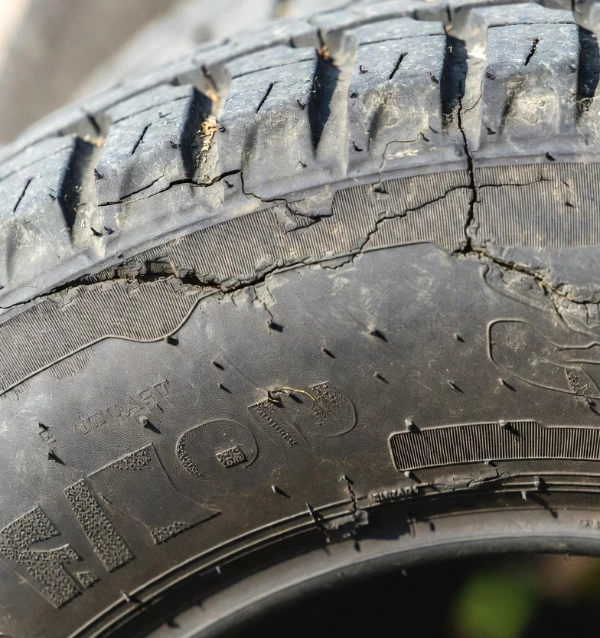
Look closely at the sidewall — the flat side of the tire facing outward. Small spiderweb cracks, flaking rubber, or deep fissures are dry rot, and it's extremely common on vehicles that sit outside in the Florida sun. Dry-rotted tires cannot be repaired. They need to be replaced before the cracks reach the steel belts underneath.
2. Bulges or Bubbles
A visible bulge on the sidewall means the internal cords have separated — usually from a pothole hit, a curb strike, or heat fatigue. A tire with a bubble can fail without warning at highway speed. If you see one, don't drive the vehicle any further than your nearest tire shop in Ocala.
3. Tread Worn Below 4/32"
The old penny test (Lincoln's head) tells you when a tire is legally bald at 2/32". But in Florida's daily summer thunderstorms, anything under 4/32" dramatically increases hydroplaning risk. Bring a quarter instead — if the tread doesn't reach Washington's head, your tires are ready to replace.
4. Uneven or Cupped Wear
If one edge of your tire is worn more than the other, or you see scalloped "cupping" across the tread, you have an alignment, suspension, or balance issue. Continuing to drive on unevenly worn tires in the heat accelerates failure — and it's throwing away rubber you already paid for. A quick alignment check and tire rotation in Ocala can save the remaining tread life.
5. Vibration at Highway Speed
Heading up I-75 to Gainesville or down to Orlando? If the steering wheel shakes between 50 and 70 mph, you likely have a balance issue, a belt separation inside the tire, or a bent wheel. All three get worse in heat, and all three are dangerous.
6. Tire Pressure Light That Keeps Coming On
Florida's daily temperature swings — cool mornings, 95° afternoons — cause tire pressure to fluctuate 3–5 PSI per day. A TPMS light that turns on overnight but goes off by noon is usually normal. One that stays on, or returns within days of being topped off, means you have a slow leak, a failing valve stem, or a porous wheel. Don't ignore it.
7. Tires Older Than 6 Years (Regardless of Tread)
Find the DOT code on the sidewall. The last four digits are the week and year of manufacture — "2419" means the 24th week of 2019. In Florida's climate, tires older than six years should be replaced even if the tread looks good. The rubber compounds are no longer safe at highway speed, especially once summer pavement temperatures climb.
What an Ocala Summer Tire Check Should Include
Before the heat peaks, we recommend every driver in Marion County get a free tire inspection that covers:
- Tread depth measurement on all four tires
- Sidewall and bead inspection for cracking, bulges, and damage
- DOT date code check
- Tire pressure set to the manufacturer's spec (hot Florida days call for checking in the morning, not after a drive)
- Rotation if tires haven't been moved in 5,000–7,500 miles
- Alignment check if you've felt pulling, vibration, or uneven wear
Most of that can be done in 20–30 minutes while you wait.
How to Make Your Tires Last Longer in Florida
Even the best all-season tires wear out faster here than they would up north, but a few habits extend their life:
- Rotate every 5,000–7,500 miles. Front tires in Ocala wear faster because of the heat, braking, and steering load.
- Check pressure monthly. Underinflated tires build up heat fast — the #1 cause of summer blowouts.
- Park in the shade when you can. UV is the enemy. A carport or garage adds years of life.
- Don't skip the alignment. Florida's road construction and potholes knock cars out of alignment constantly. Alignment is the cheapest way to protect your tire investment.
- Buy tires rated for hot climates. Not every "all-season" tire is designed for sustained high-heat driving. Ask about heat-rated touring and performance tires next time you shop.
Need Tires or a Free Inspection in Ocala?
Tire Express & Complete Auto Service has been helping Ocala, Belleview, Summerfield, Silver Springs, and The Villages drivers stay safe on Florida roads for years. We offer new and used tires, same-day installation on most brands, tire repair, rotation and balancing, alignments, and complete auto service — all at competitive prices.
If any of the seven warning signs above sound familiar — or if you just want peace of mind before the summer heat sets in — stop by for a free tire inspection. We'll tell you honestly whether your tires have another season in them or whether it's time to replace.
Call us, book online, or just drive in. It's a lot cheaper than a blowout on I-75.
Tire Express & Complete Auto Service is Ocala's locally owned tire shop and auto repair center, serving Marion County and Central Florida drivers with over 50 years of combined industry experience.
0 Comments